Ist es für die Schulbeleuchtung kosteneffizient, -LED-Lampen für die Schulbeleuchtung einheitlich zu ersetzen?
Nowadays, an indisputable fact is that the proportion of myopia in children is getting higher and higher, and parents are more and more worried about their children's various vision problems. As the only country in the world that implements eye exercises, the rate of myopia among young people is at the forefront! When many parents find that their children have vision problems, the first thing that comes to mind is playing games on mobile phones, or reading a book. In fact, the illuminance of the desktop and the illuminance of the blackboard are also closely related to the child's eyesight. In order to curb the rise in the rate of myopia, the education industry jointly issued the "Guiding Opinions on Strengthening the Prevention and Control of Myopia in Children and Adolescents", emphasizing that: all primary and secondary schools should ensure various teaching facilities and conditions in accordance with the requirements of the "Prevention and Control Work Plan" ( The lighting and lighting of classrooms and dormitories comply with relevant national documents and standards, and provide students with a learning environment that meets the requirements of eye hygiene. For new schools, acceptance standards must be set according to national standards during construction and design.
Die Beleuchtungsumgebung einer Schule muss modernisiert werden, und die traditionellen T8-Leuchtstofflampen werden durch LED-Lampen für die Unterrichtsbeleuchtung ersetzt. Dies ist mit einem enormen Aufwand verbunden. Die Leiter vieler Schulen mit nicht so starker Wirtschaft haben begonnen, darüber nachzudenken. Um die Beleuchtungsstandards der Bildungsbranche zu erfüllen, ist es für die Schulbeleuchtung kosteneffizient, -LED-Lampen für die Beleuchtung von Bildungseinrichtungen einheitlich zu ersetzen?
To be honest, it is necessary for the lighting of a school to meet the educational lighting standards, sooner or later. "A strong youth makes the country stronger, and a healthy youth makes the nation prosperous." Providing a beautiful light environment for children is a significant feat.
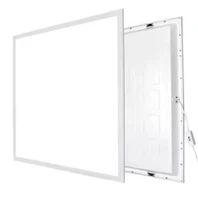
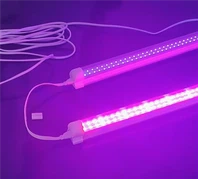
Aus einer langfristigen{{0}}Perspektive ist es tatsächlich ziemlich kosteneffektiv-, die Campusbeleuchtung aufzurüsten. Die aktuelle Umfrage zeigt, dass der Stromverbrauch von LED-Lampen für die Unterrichtsbeleuchtung viel geringer ist als der von herkömmlichen T8-Leuchtstofflampen. Wir haben von Venucia erfahren, dass 30-W-LED-Klassenzimmerleuchten für Bildungsbeleuchtung herkömmliche 80-W-T8-Leuchtstofflampen ersetzen können und 40-W-LED-Tafelleuchten für Bildungsbeleuchtung herkömmliche 80-W-T8-Leuchtstofflampen ersetzen können. 80-W-Leuchtstofflampen wurden in der Vergangenheit häufig in Klassenzimmern verwendet. Eine Lampe enthält zwei Leuchtstoffröhren, eine Leuchtstoffröhre verbraucht 36 W und das passende Vorschaltgerät verbraucht 4 W. Daraus lassen sich die Energie-sparvorteile von LED-Lampen für die Beleuchtung von Bildungseinrichtungen berechnen. Basierend auf 50 Klassenzimmern in einer Mittelschule, jedes Klassenzimmer hat 9 Klassenzimmerleuchten, 2 Tafelleuchten, und die Lichter werden 10 Stunden am Tag eingeschaltet, kann berechnet werden, dass der tägliche Stromverbrauch eines Klassenzimmers vor der Renovierung 7,2 kWh beträgt , und der tägliche Stromverbrauch eines Klassenzimmers nach der Renovierung beträgt 7,2 kWh. Der Stromverbrauch beträgt 3,5 kWh, sodass die LED-Lampen der Bildungsbeleuchtung 5,3 kWh Strom pro Tag einsparen können und die Energieeinsparung 151 Prozent erreicht. Daraus lässt sich auch schließen, dass die Stromeinsparung einer Schule an einem Tag 265 kWh und die Stromeinsparung einer Schule in einem Jahr (berechnet auf Basis von 250 Unterrichtstagen) 66.250 kWh beträgt. Wenn die Stromkosten 0,88 Yuan pro Grad betragen, dann werden es 58.300 Yuan in einem Jahr sein.
After the school lighting fixtures are replaced with educational lighting LED fixtures, in addition to the economic effects brought by energy saving and power saving, it can also bring huge economic effects in terms of maintenance. According to statistics from Qichen Industrial, the maintenance cost of a fluorescent tube lamp is about 158 yuan for one year, including the replacement of lamp tube, ballast, starter and labor costs. Usually, there are 11 fluorescent lamps in a classroom, and each lamp has two lamp houses, that is, 22 lamps, so the maintenance cost of one classroom lamp tube is 3476 yuan, and the maintenance cost of 50 classroom lamp tubes is 173800 yuan. Yuan. According to the 8-year service life of a set of traditional lighting fluorescent lamps, the maintenance cost of this school's lighting lamps is as high as 1,390,400 yuan. The educational lighting LED lamps have a service life of up to 50,000 hours, and are basically maintenance-free within 8 years. Therefore, the economic effect brought by the educational lighting transformation is quite considerable, and it can save the school about 1,856,800 yuan in 8 years.
If the school's educational lighting is also equipped with a smart campus lighting system, secondary energy saving can be achieved. The smart campus lighting system can realize intelligent management and control: class mode, projection mode, self-study mode, activity mode, cloudy supplementary light mode, constant illumination mode, self-detection of classroom personnel activities, automatic shutdown of equipment when no one is present, to prevent power waste, All-round energy saving.